Drip vs Sprinkler Irrigation: Advice from the Best Irrigation System Dealers
Choosing the right irrigation system can make a significant difference to plant health, water consumption, maintenance, and overall landscape performance. However, many property owners are unsure whether they should choose drip irrigation or a sprinkler irrigation system. The right option depends on the type of plants, landscape design, soil, available water, and watering requirements. For homeowners, offices, commercial landscapes, nurseries, and vertical gardens in Delhi, working with the Best Irrigation System dealers in Tilak Nagar can simplify this decision. Professional guidance helps you select an irrigation solution that delivers water where plants need it while reducing unnecessary wastage.
For fast information, direct chat with us on WhatsApp
Drip irrigation delivers water slowly and directly to the plant root zone, making it ideal for beds, pots, shrubs, and water-efficient landscaping. Sprinkler irrigation distributes water over a wider area and works well for lawns and large planted spaces. The better system depends on plant type, landscape size, soil, and watering requirements.
Understanding Drip Irrigation
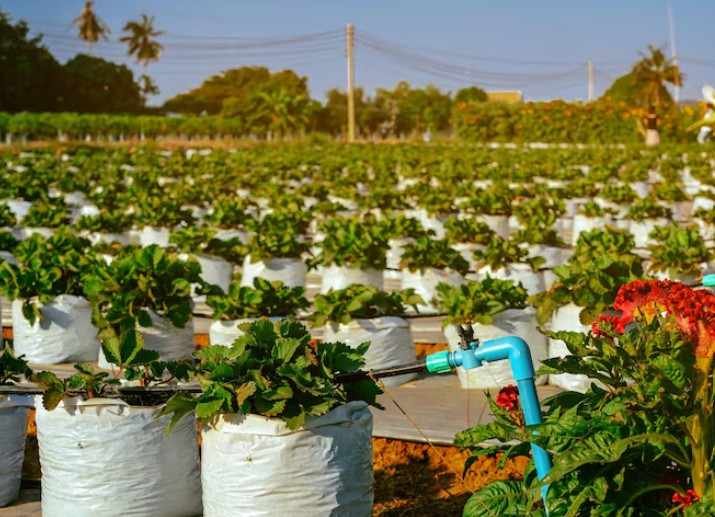
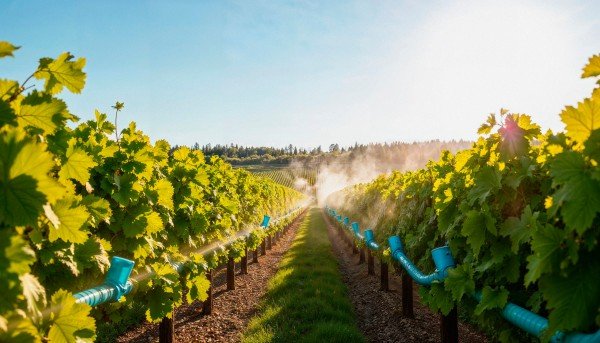
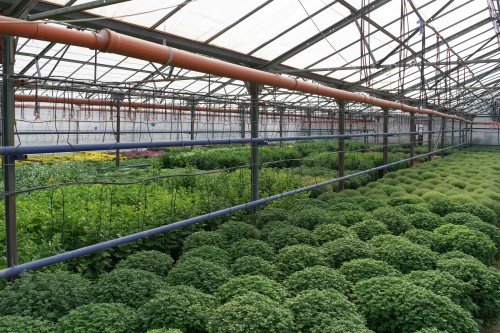
Drip irrigation is a targeted watering method that supplies water through emitters installed along a network of pipes or tubing. Instead of wetting the entire surface, it releases water gradually near the roots.
This approach offers precise water delivery and can work particularly well for:
- Flower beds and vegetable gardens
- Shrubs and hedges
- Potted plants
- Trees and individual plants
- Vertical gardens
- Narrow landscape areas
Because water reaches the root zone directly, evaporation and runoff can be reduced when the system is properly designed and maintained.
Key Benefits of Drip Irrigation
One of the biggest advantages of drip irrigation is control. You can regulate how much water reaches different plants based on their requirements.
It also keeps much of the surrounding foliage dry. This can be useful in certain landscapes where prolonged leaf wetness may contribute to plant disease problems.
Furthermore, drip systems can be integrated with timers, filters, pressure regulators, and automated controllers. As a result, homeowners can create a more consistent watering schedule without manually watering every plant.
Understanding Sprinkler Irrigation
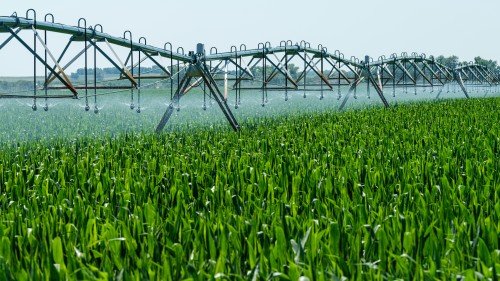
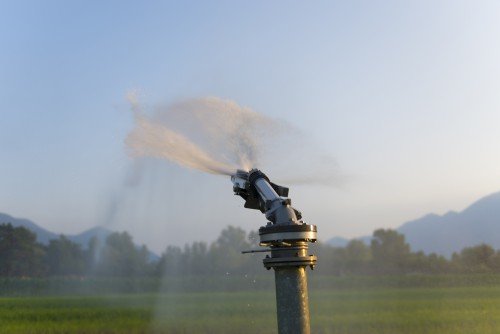
Sprinkler irrigation distributes water through spray heads, rotors, or other sprinkler devices. These components create a spray pattern that covers a defined landscape area.
Sprinklers are commonly used for:
- Residential lawns
- Parks and open gardens
- Large landscape areas
- Sports grounds
- Commercial properties
- Areas with dense groundcover
A properly designed sprinkler system can provide relatively uniform coverage. However, its effectiveness depends on correct sprinkler spacing, pressure, nozzle selection, water flow, and system layout.
Drip vs Sprinkler: Which Irrigation System Is Better?
There is no single irrigation method that works best for every property. Instead, compare the systems according to your landscape requirements.
| Factor | Drip Irrigation | Sprinkler Irrigation |
|---|---|---|
| Water delivery | Directly to root zone | Sprayed over an area |
| Best suited for | Beds, pots, shrubs, vertical gardens | Lawns and large open areas |
| Water control | Highly targeted | Area-based |
| Wind sensitivity | Generally low | Can be affected by wind |
| Installation | Tubing and emitters | Pipes, valves and sprinkler heads |
| Automation | Easy to automate | Easy to automate |
| Maintenance | Requires emitter and filter checks | Requires nozzle and sprinkler checks |
Therefore, the right choice should follow the landscape rather than simply focusing on the initial installation cost.
How the Best Irrigation System Dealers in Tilak Nagar Help You Choose
Selecting an irrigation system without assessing the site can lead to uneven watering, pressure problems, unnecessary water use, or frequent maintenance.
Experienced Best Irrigation System dealers in Tilak Nagar can evaluate important factors before recommending equipment. These include:
1. Landscape Size and Layout
A compact garden may benefit from a drip network, while a large lawn may need properly spaced sprinklers. Mixed landscapes can also use both systems in separate zones.
2. Plant Water Requirements
Different plants have different watering needs. Grouping plants with similar requirements helps prevent overwatering some species while leaving others too dry.
3. Soil Type
Clay, loam, and sandy soils absorb and distribute water differently. Irrigation scheduling should account for these characteristics to reduce runoff and improve root-zone moisture management.
4. Water Pressure and Flow
A professional assessment should consider the available water pressure and flow rate. This information helps determine suitable pipe sizes, emitters, sprinkler heads, valves, and irrigation zones.
5. Automation Requirements
Modern irrigation systems can include timers, controllers, sensors, and zone-based scheduling. Automation can make routine watering easier and improve consistency.
Can You Use Drip and Sprinkler Irrigation Together?
Yes. A combination system can be highly practical when a property contains different types of landscaping.
For example, sprinklers may handle a lawn, while drip lines water flower beds, shrubs, planters, or a vertical garden. Separate irrigation zones allow each section to receive a watering schedule suited to its plants.
This zoned approach can also make troubleshooting and maintenance easier. Most importantly, it avoids forcing one irrigation method to serve landscapes with completely different watering needs.
Practical Tips for Better Irrigation Performance
Regardless of the system you select, good design and regular maintenance matter.
Check filters regularly: Drip emitters can clog when water contains sediment or other particles. Filters help protect the system.
Inspect for leaks: Damaged tubing, fittings, valves, or sprinkler heads can affect water distribution.
Adjust seasonal schedules: Plants may require different watering patterns depending on weather, temperature, rainfall, and exposure.
Avoid overwatering: More water does not always mean healthier plants. Monitor soil moisture and plant condition.
Use appropriate pressure: Excessive or insufficient pressure can affect irrigation uniformity and equipment performance.
Maintain clear sprinkler heads: Grass, soil, or vegetation can interfere with sprinkler coverage.
Irrigation Solutions for Gardens and Vertical Landscapes in Delhi
Delhi’s hot summers and changing seasonal conditions make efficient landscape watering especially important. However, irrigation requirements can vary considerably between a sunny lawn, shaded garden, balcony planters, and a vertical green wall.
For this reason, irrigation planning should consider the site’s microclimate, plant selection, water availability, and installation conditions. A professional irrigation dealer can help develop a practical system rather than simply recommending standard equipment.
If you are planning a landscape or vertical garden in Tilak Nagar, discussing your requirements with experienced irrigation professionals can help you determine whether drip, sprinklers, or a combination system is more appropriate.
Conclusion
Choosing between drip and sprinkler irrigation depends on your landscape, plant requirements, soil conditions, available water, and desired level of automation. Drip irrigation provides targeted watering and suits beds, shrubs, planters, and vertical gardens, while sprinklers can provide broad coverage for lawns and larger open areas. In some properties, combining both systems offers the most practical solution.
If you are comparing irrigation options for your garden or landscape, consulting the Best Irrigation System dealers in Tilak Nagar can help you assess the site and choose suitable components. Green Tech Solution Private Limited can help you explore practical irrigation solutions designed around your landscape’s specific watering needs.